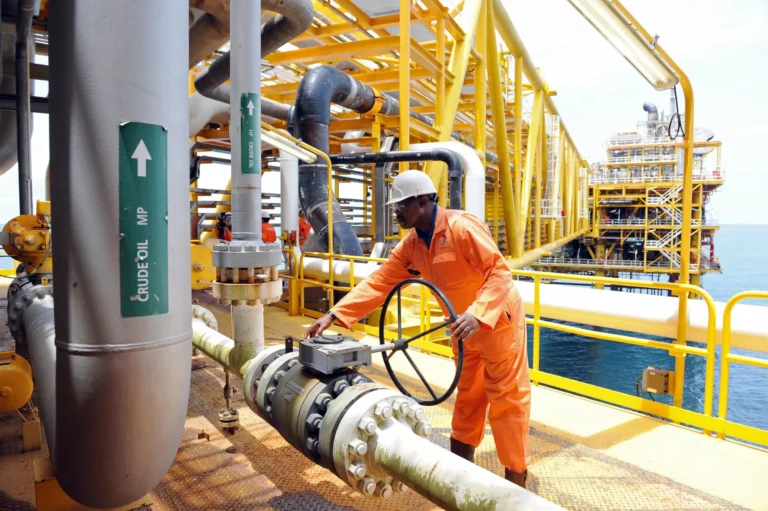





In a year defined by market turbulence, inflation pressures, geopolitical instability, and shifting monetary policy, one sector continues to outperform expectations: energy equities. Despite uncertainty across global financial markets, energy stocks have delivered steady gains, strong dividends, and resilient cash flows, making them a preferred haven for investors seeking defensive positioning with upside potential.
While technology and consumer sectors remain sensitive to rate hikes and economic slowdown fears, energy companies have benefited from high commodity prices, disciplined capital spending, and structural demand strength. As volatility remains the dominant theme across global markets, investors are increasingly turning to energy equities for stability and superior risk-adjusted returns.
Strong Fundamentals Drive Outperformance
Energy stocks have consistently outperformed broader indices in 2024–2025, supported by disciplined balance sheets, share buybacks, and robust free cash flow.
Key Fundamentals Supporting the Sector
High oil prices supported by OPEC+ supply discipline
Growing LNG demand from Europe and Asia
Record cash flow levels among oil majors and shale producers
Improved capital discipline, reducing overspending on drilling
Higher dividend yields compared to most S&P sectors
With global energy demand still rising, especially across developing economies energy remains one of the few sectors with clear, structural tailwinds.


Performance Snapshot of Energy vs. Major Indices (Q4 2025)
| Index / Sector | Q4 Performance | YTD | Key Drivers |
|---|---|---|---|
| S&P Energy | +6.9% | +17.8% | High oil prices, buybacks |
| MSCI World Energy | +6.3% | +15.5% | LNG strength, lower volatility |
| S&P 500 | +2.4% | +9.1% | Tech rebound, weaker cyclicals |
| Nasdaq 100 | +1.8% | +11.4% | Sensitive to rates |
Energy continues to outperform major global benchmarks, demonstrating resilience across both bull and bear phases.
Oil Prices Provide a Stable Revenue Base
Oil prices have remained in a high, stable range due to coordinated supply management and resilient consumption.
Drivers Keeping Prices Elevated
OPEC+ supply cuts tightening global balances
Slower U.S. shale production growth
Rising jet fuel and petrochemical demand
Geopolitical risks in the Middle East and Europe
Seasonal inventory drawdowns
Stable crude prices provide energy companies with predictable revenue, reducing earnings volatility, a major advantage during uncertain economic cycles.
LNG Boom Boosts Long-Term Growth
Liquefied natural gas (LNG) has become a cornerstone of global energy security, especially as Europe diversifies away from Russian pipeline gas and Asia increases power consumption.
Why LNG Strengthens Energy Equities
Long-term contracts guarantee stable cash flow
Massive new export capacity in the U.S. and Qatar
Growing demand from China, India, and Southeast Asia
Increased investment in floating storage and regasification units (FSRUs)
The LNG supercycle adds multi-decade growth potential for integrated energy companies and midstream operators alike.
Capital Discipline Has Transformed the Sector
Unlike the shale boom era, energy companies today operate under strict financial discipline.
Companies Are Prioritizing:
Shareholder returns over aggressive production
Debt reduction to strengthen balance sheets
Low-carbon investments to remain competitive
High-return projects only, avoiding overexpansion
This shift has turned energy equities into high-yield, low-risk investments, a rare combination in volatile markets.

Dividends and Buybacks Attract Investors
Energy companies offer some of the strongest shareholder returns across any major sector.
Examples
Oil majors yield between 3–6% in dividends
Massive buyback programs from ExxonMobil, Chevron, BP, and Shell
MLPs and midstream firms offering 7–9% yields
Strong distribution growth across pipeline companies
Income-focused investors continue to gravitate toward energy because of its predictable payout profile.
Energy Equities Hedge Against Inflation and Geopolitical Risk
In uncertain markets, investors look for assets that hold firm against inflation and geopolitical shocks. Energy fits both categories.
Why Energy Is a Natural Hedge
Oil and gas prices typically rise with inflation
Energy assets gain value during geopolitical disruptions
Widespread global demand ensures long-term relevance
Commodity exposure provides diversification away from tech-heavy indices
As long as global tensions remain elevated, energy will maintain its position as a defensive safe haven.
Renewables and Transition Energy Boost Long-Term Appeal
The long-term story for energy equities is not just hydrocarbons, it’s the transition to low-carbon solutions.
Key Transition Investments
Carbon capture and storage (CCS)
Hydrogen and ammonia fuels
Renewable natural gas (RNG)
Utility-scale solar and offshore wind partnerships
Biofuels and sustainable aviation fuel (SAF)
Energy companies are evolving into integrated energy providers, increasing their resilience across future market cycles.
Risks: What Could Change the Outlook?
While energy equities remain strong performers, several risks could impact future returns:
| Risk Factor | Potential Impact |
|---|---|
| Oil price collapse | Pressure on earnings and dividends |
| Renewables policy acceleration | Reduced long-term hydrocarbon demand |
| Recession | Lower transport and industrial fuel use |
| OPEC+ discord | Supply volatility |
Still, most analysts agree that the sector’s fundamentals remain solid through 2026.

Energy equities continue to outperform in volatile markets because they offer what most sectors currently lack: strong cash flow, stable dividends, disciplined spending, and structural global demand.
As investors navigate an uncertain macroeconomic environment, energy remains one of the most compelling opportunities for both short-term resilience and long-term value. With commodity markets tightening and transition investments accelerating, energy equities are positioned to remain market leaders well into 2026.