



The offshore energy industry encompassing oil, gas, and renewables operates in some of the most complex and hazardous environments on Earth. From powerful machinery and confined spaces to unpredictable weather and remote locations, offshore work demands more than technical expertise, it demands leadership.
In this high-risk environment, safety isn’t just a set of procedures; it’s a mindset. And the people who shape that mindset are safety leaders supervisors, managers, and crew members who understand that every decision, every action, and every conversation can prevent accidents and save lives.
The Evolution of Safety in Offshore Energy
Decades ago, offshore operations were primarily focused on productivity and output. Safety was often secondary, a “necessary cost” rather than a business priority.
That began to change after a series of tragic incidents, such as:
The Piper Alpha disaster (1988): 167 workers lost their lives in the North Sea, leading to the Cullen Report and new safety frameworks.
Deepwater Horizon explosion (2010): 11 fatalities and massive environmental damage highlighted leadership failures and weak safety culture.
These events changed the industry forever. Companies realized that safety leadership must be integrated into every layer of decision-making from boardrooms to the rig floor.
Today, offshore safety is proactive, data-driven, and people-centered. It’s no longer about responding to accidents, it’s about preventing them through leadership, accountability, and culture.
The Human Factor: The Heart of Offshore Safety
Technology, automation, and digital monitoring systems have transformed offshore operations, but people remain the most vital component.
Even the most advanced safety systems rely on human judgment, communication, and decision-making. The “human factor” behavior, mindset, and leadership determines whether a system succeeds or fails.
Common Human Factors in Offshore Safety
Fatigue and stress from long shifts and isolation.
Complacency due to routine familiarity.
Poor communication among diverse, multilingual teams.
Leadership attitudes that shape how crews perceive risk.
A strong safety leader recognizes these challenges and fosters awareness, engagement, and continuous improvement.
What Is Safety Leadership?
Safety leadership goes far beyond following regulations or conducting toolbox talks. It’s about influencing people to care about safety as much as they care about results.
A safety leader:
Leads by example practicing what they preach.
Communicates clearly and consistently.
Builds trust and accountability within teams.
Encourages reporting without fear of blame.
Rewards proactive safety behaviors.
According to the International Association of Oil & Gas Producers (IOGP), companies that emphasize leadership engagement experience up to 40% fewer incidents than those that rely solely on procedural compliance.
Safety Starts at the Top
Safety culture flows from leadership. When senior executives make safety a strategic priority not just a compliance issue, it sends a powerful message to the entire organization.
Elements of Strong Safety Leadership
Visible commitment: Executives regularly visit offshore sites to engage with crews.
Transparency: Reporting near-misses and incidents openly to promote learning.
Investment: Funding training, safety technologies, and preventive maintenance.
Empowerment: Giving employees the authority to halt operations if they spot a hazard.
As BP and Equinor have shown, sustained leadership commitment to safety doesn’t just prevent accidents, it builds loyalty, efficiency, and trust.
Empowering Workers: Everyone’s a Leader
Offshore safety leadership isn’t limited to management, it extends to every worker on the rig.
Empowerment in Action
Stop Work Authority: Every employee, regardless of role, can pause operations if they sense danger.
Peer-to-peer accountability: Workers look out for one another, reinforcing safe behaviors.
Open-door communication: Crews can raise safety concerns directly with supervisors without fear of retaliation.
Empowering the workforce transforms safety from a top-down directive into a shared responsibility.
Communication: The Lifeline of Offshore Safety
Clear, consistent communication is the foundation of effective safety leadership. On an offshore platform, miscommunication can have immediate and severe consequences.
Best Practices for Safety Communication
Conduct daily toolbox talks to discuss hazards and objectives.
Encourage two-way dialogue, not one-way instructions.
Use visual tools and multilingual briefings for diverse crews.
Leverage digital platforms for real-time safety updates.
The UK Health and Safety Executive (HSE) estimates that poor communication contributes to more than 20% of offshore incidents, highlighting why strong communication is non-negotiable.
Psychological Safety: Speaking Up Saves Lives
The next frontier in offshore safety leadership is psychological safety, the freedom for workers to express concerns, admit mistakes, and suggest improvements without fear.
Leaders who encourage open communication create teams that act faster and smarter in critical situations.
Building Psychological Safety Offshore
Listen actively and validate concerns.
Reward honesty and transparency.
Promote cultural awareness and inclusion.
Provide mental health support and stress management programs.
When workers feel respected and supported, they’re more engaged and engagement drives safer outcomes.
Training the Next Generation of Safety Leaders
Developing strong safety leaders starts with education and continuous learning. Offshore companies are investing heavily in leadership development programs that emphasize emotional intelligence and real-world problem-solving.
Key Training Programs
Behavior-Based Safety Leadership (BBSL): Focuses on influencing safe behaviors through observation and feedback.
Human Factors and Decision-Making: Understanding how cognitive biases affect judgment.
Digital Safety Management Systems: Using AI and data analytics to guide safer operations.
Crisis Leadership Workshops: Preparing leaders to make calm, clear decisions during emergencies.
Certifications from organizations like NEBOSH and OPITO now include modules on leadership, communication, and behavioral safety, proving that technical knowledge alone is no longer enough.
Technology and the Human Connection
Technology has become a key ally in improving offshore safety, but it works best when combined with human judgment.
Examples of Tech-Enabled Safety
AI Predictive Analytics: Detect potential hazards before they escalate.
Wearable Sensors: Monitor fatigue, temperature, and environmental exposure.
Drones and Robotics: Perform inspections in dangerous areas.
Digital Twins: Simulate emergency scenarios for crew training.
These tools enhance situational awareness but ultimately, leaders interpret and act on the data. The future of safety depends on how effectively humans and technology collaborate.
Measuring Safety Leadership Success
How can companies measure the impact of safety leadership? Beyond the obvious metrics like injury rates or downtime, successful leaders are evaluated by:
Employee engagement scores on safety initiatives.
Near-miss reporting frequency (more reports mean greater awareness).
Training participation rates and skill retention.
Peer recognition programs celebrating safety champions.
Safety leadership success isn’t about zero incidents alone, it’s about building a resilient culture that prevents incidents through awareness and teamwork.
Challenges in Safety Leadership
Even the most dedicated leaders face challenges maintaining safety standards offshore:
Complacency: Long stretches without incidents can lead to reduced vigilance.
Fatigue and burnout: Extended shifts in isolation impact focus.
High turnover: New crews require ongoing retraining and reinforcement.
Cultural barriers: Multinational teams may interpret safety expectations differently.
Overcoming these challenges requires consistency, empathy, and innovation. Leaders must model behavior, not just mandate it.
Safety Leadership in Renewables
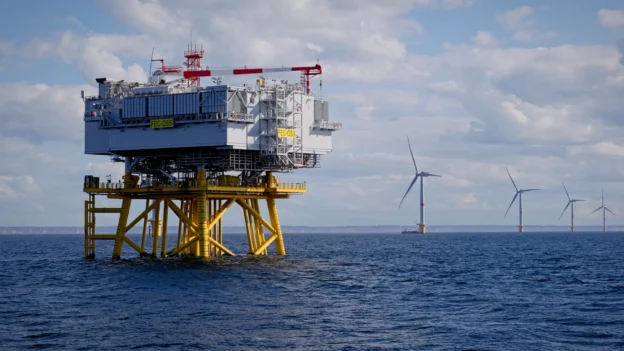
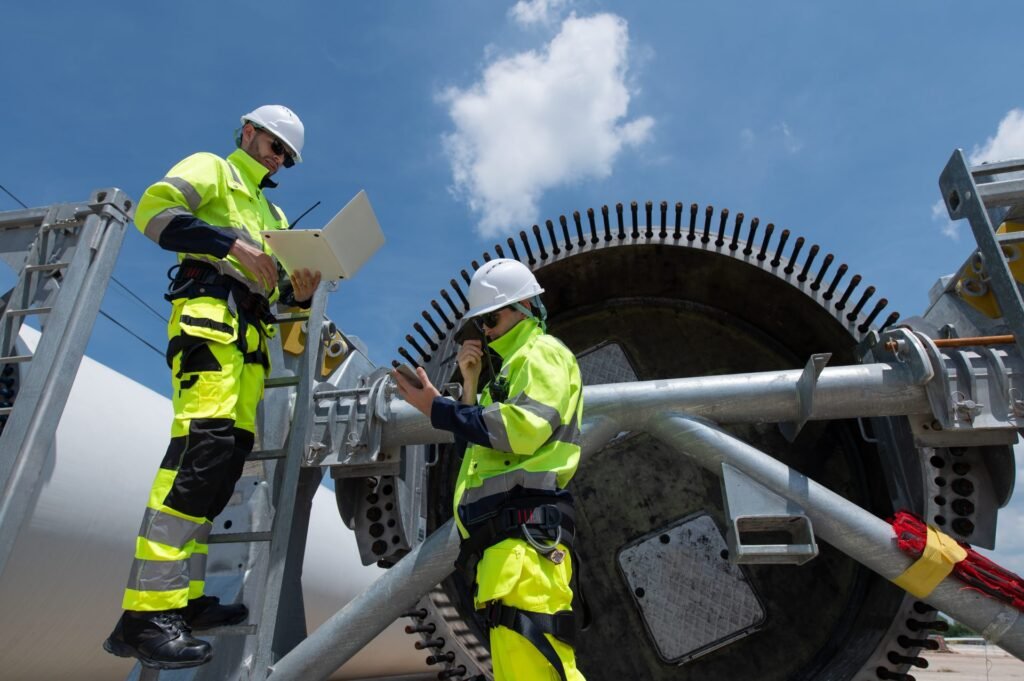
As offshore wind, hydrogen, and carbon capture projects expand, safety leadership remains vital, even as risks change.
High-voltage systems in offshore wind demand specialized electrical safety protocols.
Hydrogen projects introduce flammable materials that require rigorous containment measures.
New crews and contractors need strong onboarding to match oil and gas safety standards.
The renewable transition has created a new era of cross-sector collaboration, where traditional oil and gas expertise is combined with emerging technologies to maintain world-class safety performance.
Building a Learning Culture: Turning Incidents into Insights
No system is perfect. Even with the best safety programs, incidents will happen. The key is how organizations respond.
Leaders who turn incidents into learning opportunities rather than assigning blame build stronger, more resilient teams.
The Learning Leader Approach
Conduct root cause analyses that focus on systems, not individuals.
Share findings company-wide to prevent repetition.
Celebrate transparency and courage in reporting.
Encourage reflective discussions during safety meetings.
Learning cultures evolve when leaders listen, adapt, and continuously improve.

The Future of Offshore Safety Leadership
As the industry becomes more digitized and diverse, safety leadership will evolve into a multi-dimensional discipline combining psychology, technology, and strategy.
Future Safety Leadership Trends
AI-enhanced decision-making using predictive data.
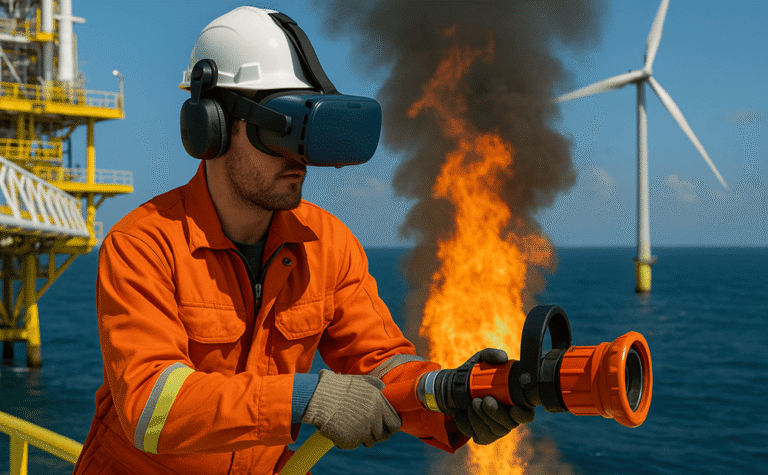
Virtual Reality (VR) training for immersive emergency simulations.
Diversity-focused leadership to address cultural dynamics offshore.
Integrated sustainability and safety goals within corporate strategies.
The offshore leader of tomorrow will be part engineer, part mentor, and part innovator driving safety not by authority, but by influence and empathy.
In offshore energy, success isn’t measured only by barrels produced or turbines installed it’s measured by the people who go home safely after every shift.
The human factor leadership, communication, and care remains the foundation of that success. Technology can enhance safety systems, but it’s the leaders who build trust, foster accountability, and model the right behavior who truly make the difference.
As the energy industry transitions into a new era of sustainability and innovation, one principle remains timeless: safety leadership defines success.