



Offshore energy whether oil & gas, subsea construction, or offshore wind has always been an industry defined by high-risk environments and complex operations. Despite significant advancements in engineering, equipment design, and safety culture, one truth remains unchanged: the human factor is central to operational safety.
Traditional safety training, while effective, often struggles to replicate the stress, unpredictability, and high-consequence situations workers face on rigs, vessels, and offshore platforms. The result is a gap between classroom learning and real-world risk exposure.
Enter Virtual Reality (VR).
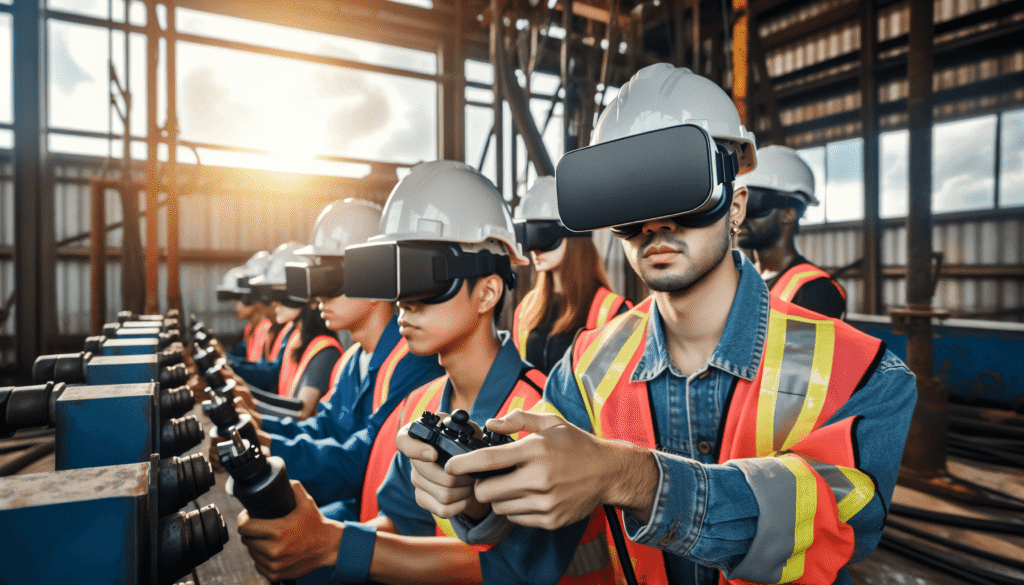
VR is no longer a novelty, it’s rapidly becoming a core training tool for offshore operators and training bodies. Organizations such as OPITO, Shell, and Equinor are already experimenting with immersive learning environments designed to sharpen situational awareness, improve reaction times, and reduce the probability of human error. Even major regulators acknowledge the value of immersive learning: the UK Health & Safety Executive (HSE) notes that simulated environments significantly enhance retention and hazard recognition.¹
As the energy transition accelerates and offshore operations expand into deeper waters and harsher environments, VR is poised to redefine how employers prepare crews for the challenges ahead.
Why Offshore Safety Training Needed an Upgrade
A High-Risk Industry With No Room for Error
Offshore operations involve:
Confined spaces
Heavy machinery
Extreme weather
Helicopter transport
Marine operations
Emergency response scenarios
High-pressure drilling environments
Traditional training methods classroom instruction, videos, slide decks, and limited physical simulations cannot fully recreate these conditions. As a result:
Workers often learn the theory, but not the feeling.
The difference between:
Reading about a blowout preventer alarm
And standing on a simulated rig deck with alarms, vibrations, and urgency
…is immense.
The gap between theoretical training and psychological readiness has contributed to preventable incidents across global offshore operations.
Human Error: The Last Frontier in Safety
Despite engineering advances, IOGP data consistently shows human factors are involved in a majority of incidents offshore.²
Issues include:
Miscommunication
Fatigue
Poor situational awareness
Misjudgment
Stress-induced mistakes
Failure to follow emergency steps
VR directly targets these weaknesses.
How Virtual Reality Is Transforming Offshore Training
1. Immersive Hazard Recognition
Standard hazard recognition training often relies on static images or videos. VR turns it into an experiential process.
Workers can:
Walk around virtual rigs
Identify hazards in real time
Interact with equipment
Practice “stop work authority”
Experience the consequences of missed hazards (in simulation)
Research from the National Safety Council shows VR-enhanced hazard recognition improves retention by up to 75%, compared to approximately 10% for traditional classroom training.³
2. Safe, Realistic Emergency Response Practice
Emergencies offshore are rare—but when they happen, response speed and clarity determine survival.
VR enables teams to practice:
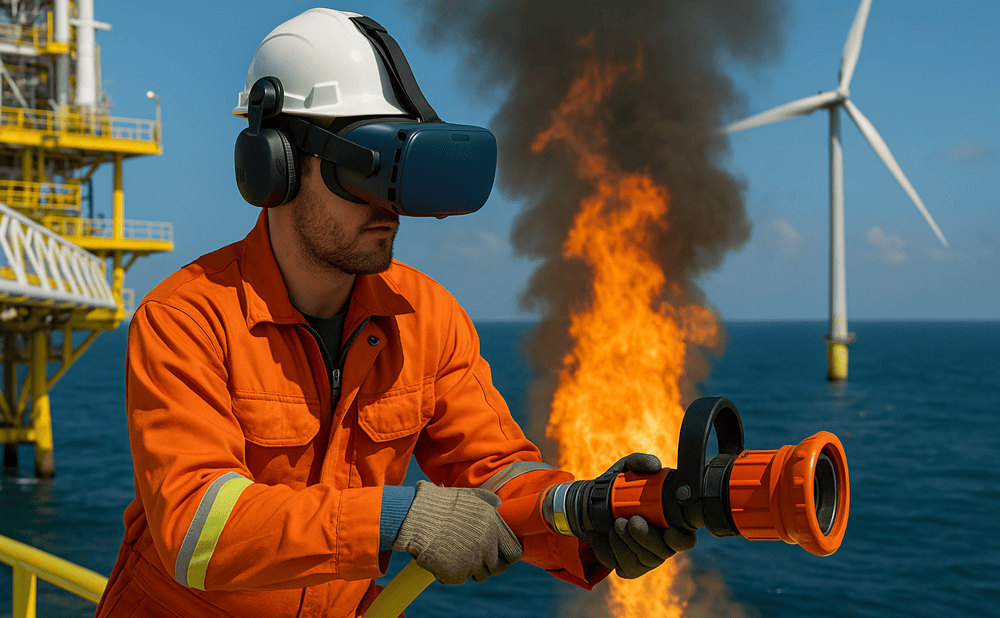
Fire response
Man-overboard drills
Helicopter ditching procedures
Lifeboat boarding
Blowout and well-control scenarios
Gas release events
Platform evacuation
All without physical danger.
OPITO-standard courses, including BOSIET and FOET, are increasingly incorporating VR modules to support procedural learning and reduce learner anxiety before physical drills.⁴
Muscle Memory and Decision-Making Under Stress
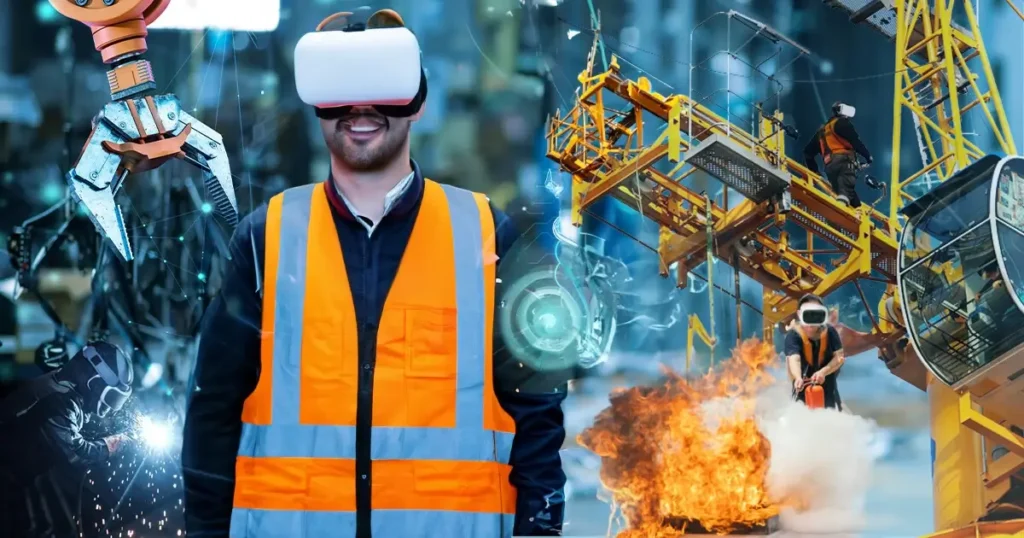
VR simulations recreate:
Alarm sounds
Low visibility
Smoke
Heat perception (via haptics)
Confined movement
Multisensory immersion
This triggers the cognitive stress responses workers experience during real incidents allowing them to build muscle memory in high-pressure conditions.
Complex Team-Based Scenarios
Many offshore incidents result from breakdowns in team communication.
VR allows:
Multi-user scenarios
Remote collaboration
Cross-functional emergency drills
Leadership assessment
Communication skill development
Using a shared simulation, teams can practice coordinated responses regardless of location.
Training Without Operational Disruption
Traditional simulations:
Require physical equipment
Demand large training spaces
Involve downtime
Are expensive to reset and maintain
VR simulations:
Run anytime, anywhere
Reset instantly
Expand to new scenarios automatically
Reduce cost per trainee over time
Key Technologies Powering Offshore VR Training
1. Haptic Feedback Systems
Haptics add physical sensation to virtual training:
Recoil from tools
Vibrations from machinery
Heat in fire scenarios
Resistance when opening valves
Haptic suits and gloves give trainees a deeper sensory experience that enhances physical memory.
2. AI-Driven Adaptive Training
Artificial intelligence adjusts difficulty levels based on trainee performance.
AI tracks:
Reaction speed
Accuracy
Gaze direction
Stress indicators
Movement efficiency
This allows personalized training paths aligned with skill levels.
3. Digital Twin Integration
A digital twin is a high-fidelity digital copy of a physical asset or facility.
Companies like Equinor and BP use digital twins for engineering and maintenance—and now for training.⁵
Integration allows workers to train:
On exact models of their rigs
With the same layout, equipment, and workflow
Before deployment
Without travel
4. Motion Tracking & Biometric Monitoring
New VR training platforms monitor:
Heart rate
Stress levels
Reaction time
This provides data on whether a trainee is overwhelmed or ready for more complex scenarios.
5. Mixed Reality (MR) and Augmented Reality (AR)
MR and AR bring virtual elements into physical spaces.
Examples:
Overlaying maintenance steps onto real equipment
Guiding new technicians with visual cues
Remote expert support
While VR recreates environments, AR enhances real-world training and operations.
Applications of VR in Offshore Safety Training
1. BOSIET and HUET Preparation
BOSIET (Basic Offshore Safety Induction and Emergency Training) and HUET (Helicopter Underwater Escape Training) are among the most challenging requirements for offshore workers.
VR helps trainees:
Understand procedures before physical simulations
Reduce anxiety about underwater escape drills
Practice steps repeatedly
Gain confidence through guided simulations
2. Well Control and Drilling Simulations
Drilling operations carry catastrophic risk if mishandled.
VR drills simulate:
Kick detection
Pressure management
Blowout preventer (BOP) activation
Shaker room incidents
Mud pit monitoring
These scenarios teach real-time decision-making without jeopardizing rigs or personnel.
3. Crane and Lifting Operations
Improper lifting remains a major incident category offshore.
VR training simulates:
Blind lifts
Wind effects
Mechanical failures
Load shifts
Communication protocols
Operators can make mistakes safely and learn from them.
4. Confined Space and Permit-To-Work Situations
Workers learn how to:
Assess atmospheric hazards
Follow entry procedures
Identify improper lockout/tagout
Communicate with standby personnel
VR makes it possible to train for dangerous scenarios that are impractical to recreate physically.
5. Fire Response and Hazardous Gas Scenarios
Scenarios include:
Flash fires
Gas leaks
Structural fires
Smoke-filled corridors
Alarm and muster drills
These simulations help workers rehearse stressful actions repeatedly.
Real-World Examples: VR Training in Action
1. OPITO’s Move Toward Immersive Learning
OPITO has published research supporting immersive training technologies and is integrating VR protocols into future standards.⁴ Their pilot programs show increased retention and reduced pre-training anxiety.
2. Shell’s VR Safety Simulations
Shell has tested VR hazard recognition modules across global operations, helping workers identify unsafe conditions before arriving at worksites.⁶
3. Equinor’s Digital Twin Training
Equinor uses digital twins extensively, enabling workers to train on exact replicas of offshore assets. This ensures familiarity before stepping onto platforms.⁵
4. Offshore Wind Workforce Development
Offshore wind operators increasingly use VR to train new technicians in:
Tower climbs
Emergency descent
Turbine internal layout
Rescue operations
This shortens training cycles and improves safety compliance.
The Benefits of VR in Offshore Training
1. Improved Safety Performance
VR enhances:
Hazard awareness
Response speed
Communication
Confidence
Incident prevention
This leads to fewer near misses and reduced LTI (Lost Time Incidents).
2. Lower Training Costs Over Time
Although initial investment is higher, VR reduces:
Travel expenses
Facility overhead
Instructor time
Equipment wear
Scenario reset costs
3. Higher Knowledge Retention
Multiple studies confirm that VR engages long-term memory more effectively than traditional training.
4. Better Workforce Readiness
Workers arrive offshore:
More confident
More prepared
More aware of site-specific risks
5. Standardized Global Training
VR ensures every trainee experiences the same high-quality scenarios, regardless of location.
6. Flexibility for Remote and Hybrid Learning
A critical benefit for:
International crews
Contractors
New recruits
Young workers entering the industry
Challenges and Limitations of VR Training
1. Upfront Cost
Not all operators or training centers can absorb the investment immediately.
2. Technology Acceptance
Some older workers may initially struggle with VR adoption.
3. Scenario Limitations
VR is powerful—but cannot replace physical drills such as HUET fully.
4. Need for Updated Content
Outdated simulations can reduce realism or create safety misconceptions.
5. Health Concerns
Some users experience motion sickness or dizziness.
The Future of Offshore Safety Training: What’s Next?
1. Full Digital Twin Integration Across Rigs
Workers will train exclusively on digital replicas before mobilization.
2. AI-Powered Competence Assessments
Real-time behavioral analysis will automate skills evaluation.
3. Integration With Wearables
Smart PPE will feed data into VR training for personalized learning.
4. Hyper-Realistic Multi-Sensory Simulations
Future training may include:
Temperature changes
Scent simulation
Advanced haptics
Making training almost indistinguishable from real life.
5. Global Standardization Led by OPITO
OPITO is positioned to lead the development of international immersive learning standards.
6. Training for Energy Transition Skills
VR will support new offshore roles in:
Floating wind
Subsea robotics
Hydrogen production
Carbon capture infrastructure
The high-risk nature of offshore energy demands training that prepares workers for real-world hazards both physically and psychologically. Virtual Reality is bridging that gap, delivering immersive, flexible, scalable solutions that elevate competence and reduce human error.
From BOSIET preparation to well control scenarios and emergency response simulations, VR is transforming the offshore sector into a more proactive, data-driven, and human-centered safety environment.
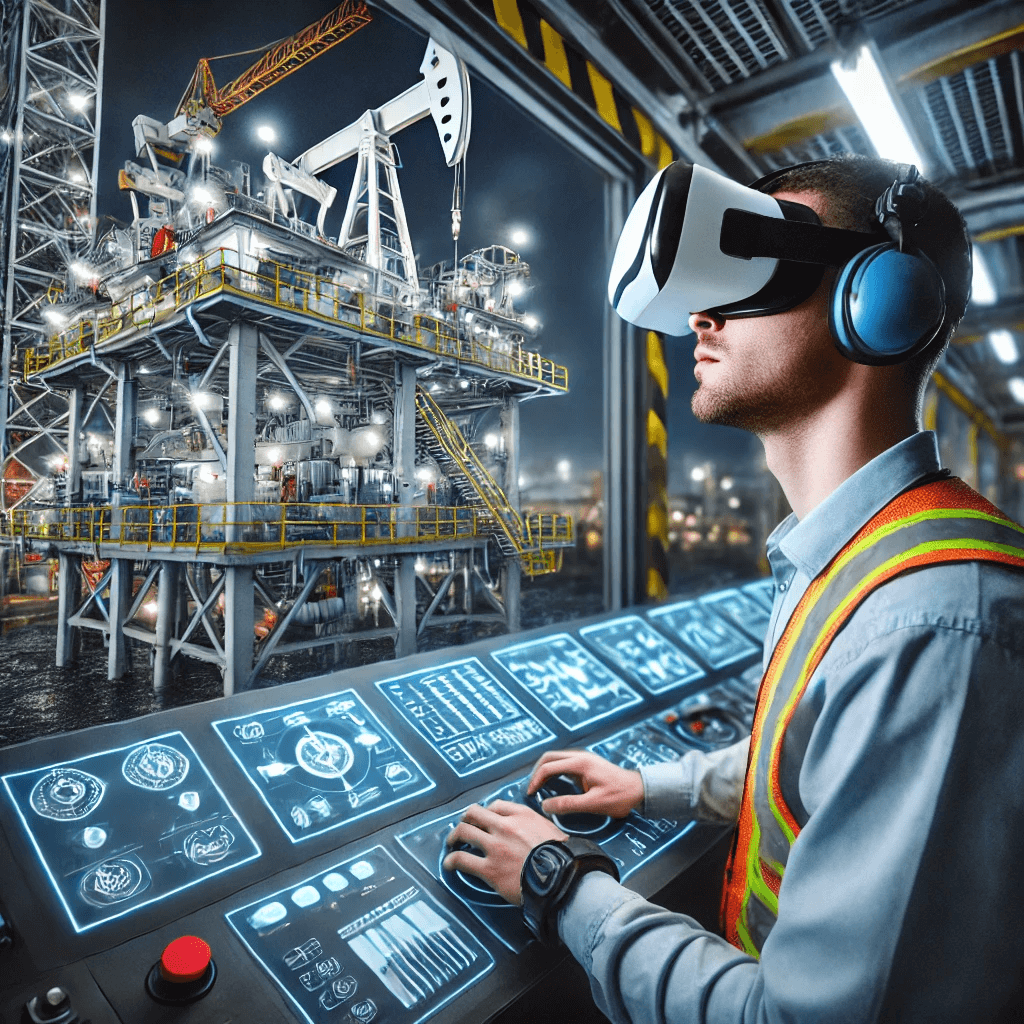
As the industry evolves embracing digitalization, automation, and new energy technologies VR will continue to be a cornerstone of workforce development. Companies that adopt immersive training early will:
Improve safety performance
Reduce incident rates
Attract younger talent
Build more resilient teams
Lead the next generation of offshore operations