


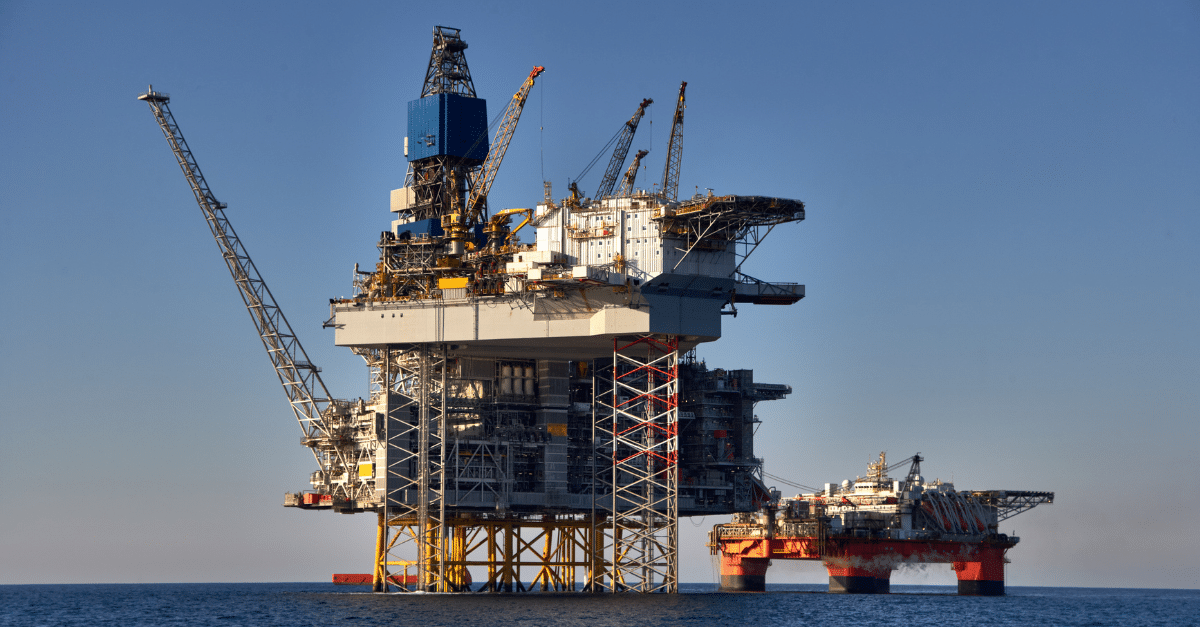

Offshore oil and gas platforms are some of the most challenging and high-risk workplaces in the world. Workers operate heavy machinery, handle flammable materials, and live hundreds of miles from land—all while facing the unpredictable power of the ocean.
Despite these dangers, the industry has made significant progress in safety performance. According to the International Association of Oil & Gas Producers (IOGP), offshore operations today are safer than ever before, thanks to advanced training, technology, and strict safety standards.
Fire and Explosion Risks
The Risk
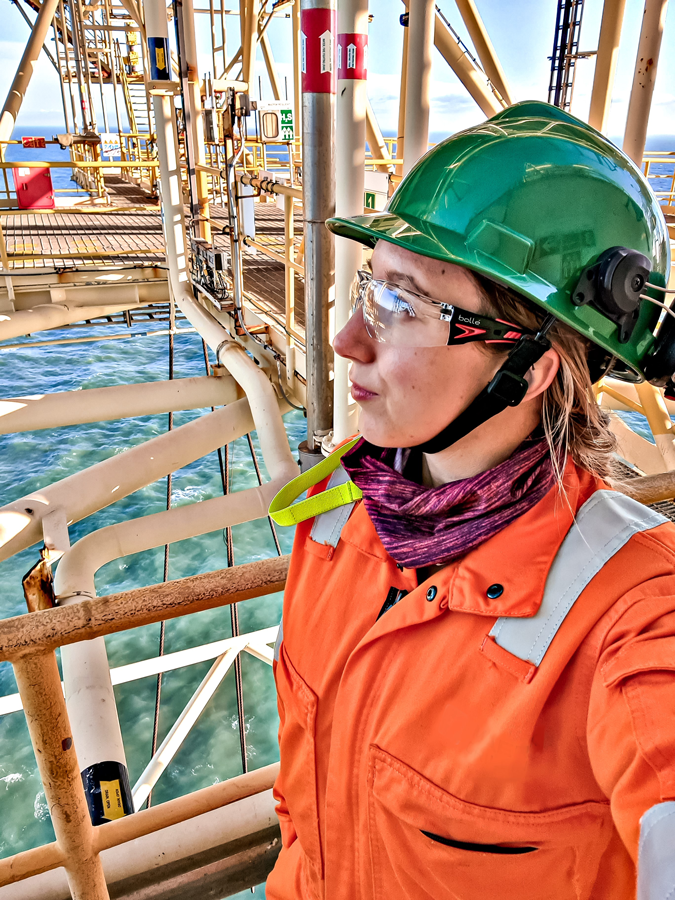
Flammable gases, crude oil, and pressurized systems make offshore platforms prone to fires and explosions. A single spark in the wrong place can lead to catastrophic results.
Protection Measures
Fire detection and suppression systems: Advanced flame and gas detectors provide early alerts.
Regular safety drills: Workers are trained to respond instantly to fire alarms and evacuation procedures.
Explosion-proof equipment: Electrical systems are built to operate safely in volatile environments.
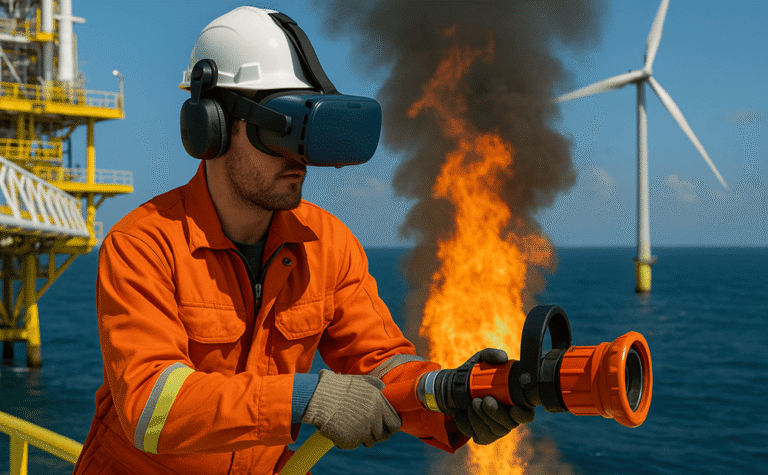
Firefighting training: Certified through organizations like OPITO and NFPA.
Falls from Height
The Risk
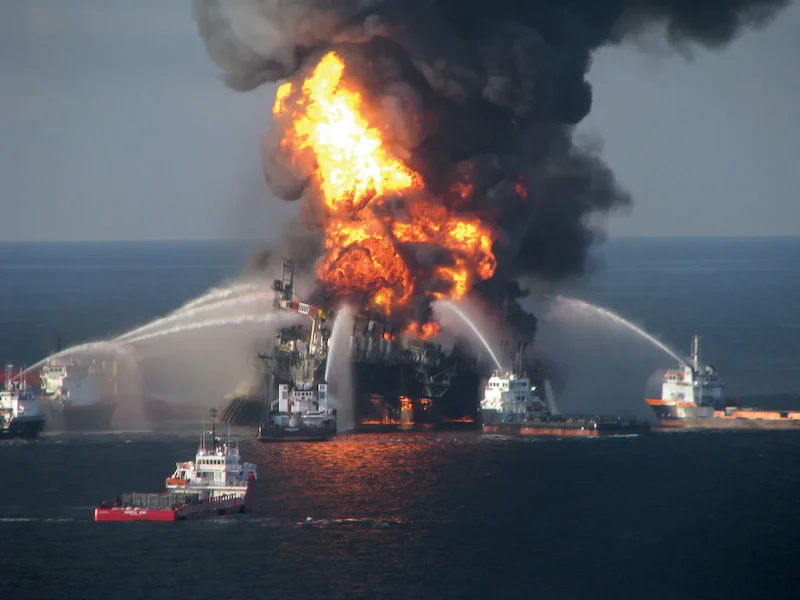
Working on platforms and rigs often means operating dozens of meters above the sea. Falls are one of the leading causes of injuries offshore.
Protection Measures
Full-body harnesses and lifelines: Required in all elevated areas.
Guardrails and anti-slip surfaces: Regularly inspected to prevent slips.
Fall arrest training: Workers complete certified training before working at heights.
Routine safety checks: Equipment is inspected before every shift.
Equipment-Related Injuries
The Risk
From drilling machinery to cranes, moving parts pose a constant hazard. A moment’s inattention can result in serious injury.
Protection Measures
Lockout/tagout procedures: Ensure machinery is safely shut down before maintenance.
Machine guarding: Physical barriers protect workers from rotating or moving parts.
PPE (Personal Protective Equipment): Hard hats, gloves, and protective footwear are mandatory.
Automation: Many rigs now use robotic systems to minimize human exposure.
Helicopter Transport Accidents
The Risk
Most offshore workers arrive by helicopter, which carries risks from adverse weather, mechanical failures, or poor visibility.
Protection Measures
Helicopter Underwater Escape Training (HUET): Workers must complete HUET training before deployment.
Strict flight weather protocols: Flights are suspended during storms or high winds.
Advanced navigation and flotation systems: Modern helicopters are equipped with safety flotation gear and tracking systems.
Harsh Weather and Sea Conditions
The Risk
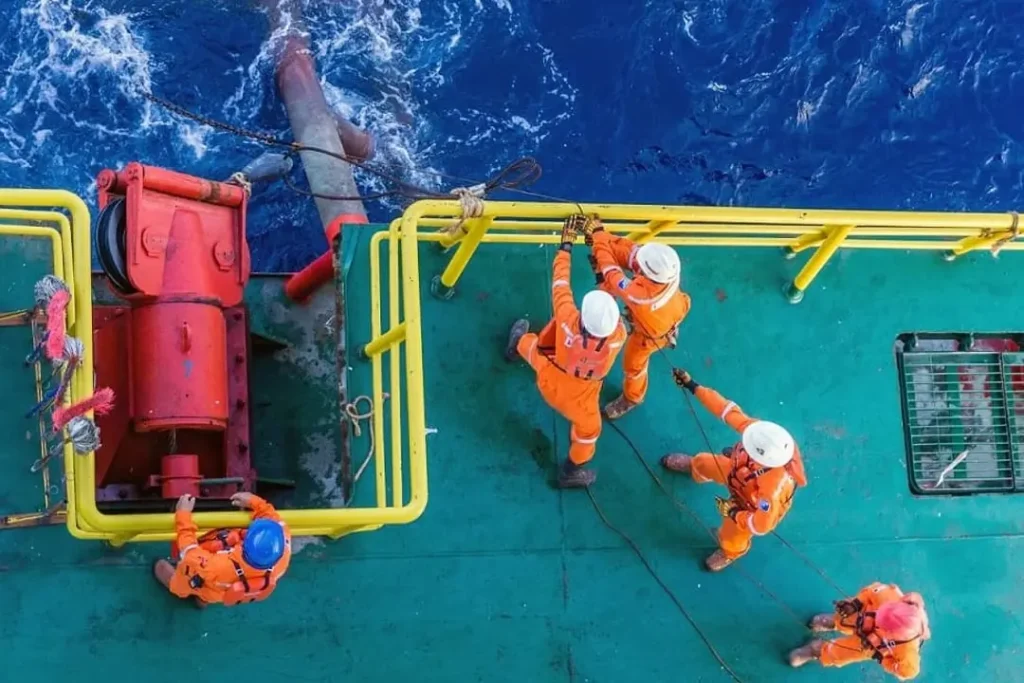
Offshore platforms endure hurricanes, freezing temperatures, and massive waves, all of which can cause structural damage and risk worker safety.
Protection Measures
Weather monitoring systems: Platforms use satellite forecasting for early storm warnings.
Evacuation procedures: Crews are trained for rapid evacuation via lifeboats or helicopters.
Reinforced structures: Offshore rigs are engineered to withstand extreme conditions.
Emergency bunkers: Provide protection during severe weather events.
Exposure to Hazardous Substances
The Risk
Oil and gas operations involve toxic chemicals and gases like hydrogen sulfide (H₂S), which can be lethal in seconds.
Protection Measures
H₂S safety training: Workers learn how to identify and respond to gas leaks.
Gas detection systems: Constantly monitor the air for harmful gases.
Respiratory protection equipment: Workers carry emergency breathing apparatuses.
Regular drills: Reinforce emergency response readiness.
Fatigue and Mental Health
The Risk
Long shifts, isolation, and the demanding nature of offshore work can lead to fatigue and mental health challenges.
Protection Measures
Shift rotation schedules: Reduce exhaustion by limiting work hours.
Onboard recreation and counseling: Many rigs now offer gyms, internet access, and mental health support.
Wellness programs: Promoted by companies like Shell and BP to help crews manage stress.
Regular mental health check-ins: Encourage early intervention and support.
Slips, Trips, and Falls
The Risk
Wet decks, oil spills, and moving equipment make slips and trips one of the most common offshore incidents.
Protection Measures
Non-slip flooring: Installed across work areas.
Housekeeping policies: Immediate cleanup of spills and debris.
Lighting systems: Adequate lighting reduces nighttime hazards.
Footwear regulations: Non-slip boots are standard PPE.
Confined Space Hazards
The Risk
Maintenance in tanks, pipelines, and storage vessels can lead to suffocation, toxic gas exposure, or entrapment.
Protection Measures
Confined space entry training: Mandatory for all maintenance staff.
Gas monitoring: Spaces are tested for oxygen and toxins before entry.
Rescue protocols: Teams must have rescue gear and procedures ready before work begins.
Buddy systems: No one works alone in confined areas.
Human Error
The Risk
Even the best technology cannot eliminate human error, which remains a leading cause of accidents.
Protection Measures
Comprehensive safety training: Workers must pass regular HSE and OSHA certifications.
Safety culture: Companies like Celavasans International Petroleum emphasize proactive safety communication and accountability.
Digital monitoring systems: AI tracks behaviors to predict and prevent risky actions.
Regular safety meetings: Encourage open reporting of potential hazards.
How Offshore Safety Has Evolved
Modern offshore platforms are equipped with advanced systems that continuously monitor air quality, equipment performance, and crew safety. Drones, sensors, and AI analytics help detect early signs of equipment wear, gas leaks, or fatigue.
Companies like Equinor, TotalEnergies, and Celavasans International Petroleum have integrated digital safety dashboards that provide real-time data to prevent incidents before they happen.
This evolution reflects the industry’s goal: zero incidents, zero harm.
Training and Certification Requirements
Every offshore worker must complete specialized safety courses before deployment, including:
| Training Program | Description | Duration | Provider |
|---|---|---|---|
| BOSIET | Basic Offshore Safety Induction and Emergency Training | 3–5 days | OPITO |
| HUET | Helicopter Underwater Escape Training | 1 day | OPITO |
| H2S Safety | Hydrogen Sulfide Awareness & Response | 1 day | API |
| First Aid / CPR | Medical emergency response training | 1–2 days | Red Cross |
| Fire Safety | Firefighting and prevention training | 2–3 days | NFPA |
These certifications are mandatory across most offshore operations worldwide and must be renewed periodically.
Safety Culture: Everyone’s Responsibility
Safety is not just about procedures—it’s a mindset. Successful offshore operations depend on every crew member’s commitment to follow safety protocols and report risks.
Companies that prioritize open communication, team accountability, and continuous training experience fewer incidents and higher morale.
Celavasans International Petroleum, for instance, promotes a “Safety First, Always” culture across its offshore teams, ensuring that every worker feels empowered to act when something seems unsafe.
The Role of Technology in Modern Offshore Safety
Modern safety practices are increasingly supported by advanced technology:
Wearable sensors: Track vital signs and detect fatigue.
AI cameras: Monitor unsafe behavior or hazardous conditions.
Drones: Inspect platforms and flares without human exposure.
Digital twins: Simulate offshore environments to train crews virtually.
These innovations have reduced accidents, improved response times, and enhanced worker confidence.
Emergency Response Systems
Preparedness is key in offshore operations. Platforms maintain detailed emergency plans that cover everything from fire response to full-scale evacuation.
Muster stations: Designated safe zones for gathering during emergencies.
Lifeboats and escape pods: Designed for quick deployment even in rough seas.
Medical bays: Staffed with trained medics for on-site emergencies.
Communication protocols: Direct links with onshore emergency centers for coordinated response.
Training ensures every crew member knows their role during emergencies—saving lives when seconds count.
The Future of Offshore Safety
The future of offshore safety will be defined by automation, predictive analytics, and global cooperation.
Automation: Robots and drones will handle more high-risk maintenance tasks.
AI analytics: Real-time monitoring will predict accidents before they occur.
Sustainability and safety integration: As platforms move toward green energy, safety frameworks will expand to include environmental risks.
Companies that invest in advanced training and digital systems will continue to lead in safety performance.
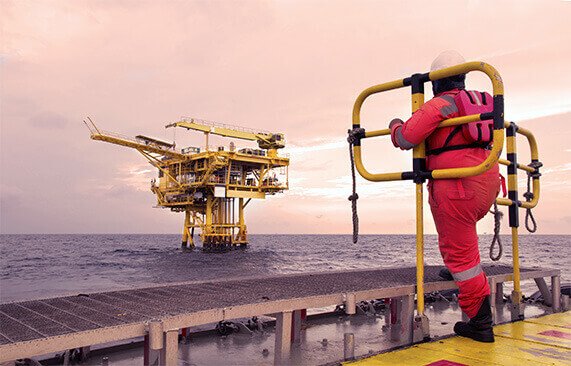
Offshore work will always carry risks but it’s how those risks are managed that defines success. Through rigorous safety training, technological innovation, and a culture of awareness, the industry continues to protect its most valuable asset: its people.
From fires and chemical exposure to mental health and human error, every risk is met with layers of defense training, systems, and teamwork.
As organizations like Celavasans International Petroleum, Shell, and BP demonstrate, a strong safety culture isn’t just compliance, it’s the cornerstone of operational excellence and sustainability.